
Discover the Untold Stories of Tadoba
The Tale of Taru and the Birth of Tadoba
Embark on a journey through time and nature, exploring the rich history and vibrant wildlife of Tadoba-Andhari. Uncover the tales of its origins and the ongoing efforts to preserve its natural wonders.
Taru-ba: The Warrior Spirit Behind Tadoba’s Soul
“In every roar, he still lives. In every tree, his tale whispers.”
The Land of Taru
Long before Tadoba became India’s premier tiger reserve, it was known as Taru-ba — the land of Taru, a legendary Gond warrior whose bravery became the beating heart of the forest.
In this vast land of thick bamboos and teak trees, where now safari jeeps quietly trail tigers, there once lived Gond kings and tribal clans. They hunted, worshipped, and protected these forests like kin. When the Marathas marched in, followed later by the British, the land changed hands, but Taru’s story remained — passed down in whispers around village fires.
 A Spirit That Still Guards the Jungle
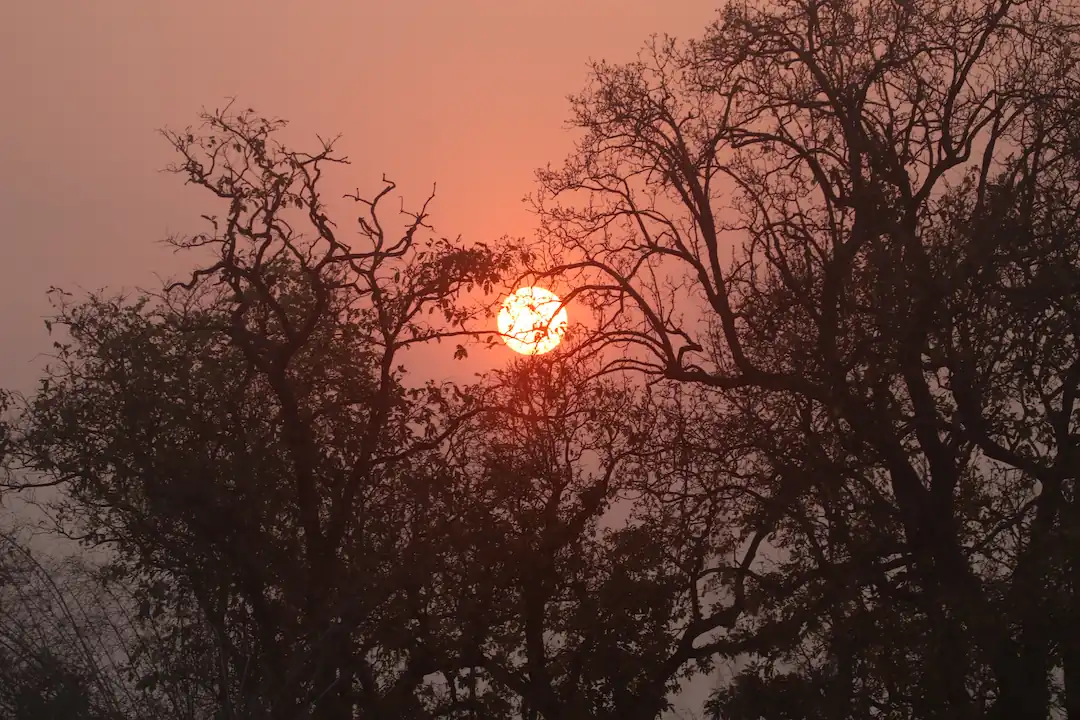
Today, as tigers stride freely through bamboo thickets and deer drink from moonlit lakes, Taru’s spirit breathes in every roar, every rustle, and every sunrise over Tadoba.
He is not just a forgotten tribal warrior. He is the soul of this jungle. His courage and sacrifice continue to inspire, reminding us that this forest was once protected by men of flesh and spirit, and now thrives as a sanctuary of nature’s grandeur.
Taru Meets the Tiger
Ask the elders in nearby hamlets and they’ll tell you: Taru was not just a man — he was strength incarnate. A respected Gond headman, he roamed the forest with pride and love for the land.
One fateful day, near a serene, shimmering lake, Taru encountered a tiger. What happened next depends on who you ask:
- Some say he fought the beast with nothing but a spear and unmatched courage — and won.
- Others believe he fell in battle, but refused to back down even in his final breath.
Either way, his spirit merged with the forest. The people built a shrine in his honor, and the lake, the hills, and the jungle around it came to be known by his name: Taru-ba — which over time became Tadoba.
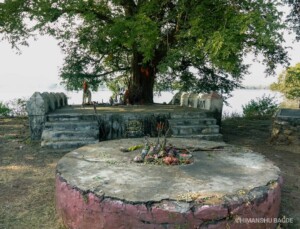
The temple of God TARU still exists beside the picturesque Tadoba Lake under a huge tree.
The Temple of Taru
The temple of God TARU still exists beside the picturesque Tadoba Lake under a huge tree.
Near the lake where his tale began, you can visit the shrine built in his name. A tribal fair was traditionally held here during the Hindu month of Pausha (December–January). Though now restricted, the cultural memory remains strong among local communities.
The Taru Temple stands not only as a place of worship but as a reminder of the sacred connection between humans, animals, and the land.
To step into that space is to step into legend — where the air feels older, the silence deeper, and the jungle seems to listen back
A Forest Born from a Legend
From Taru to TATR: The Legacy of Tadoba Andhari Tiger Reserve
Tadoba’s Historic Transformation Timeline
- 1873 – Start of systematic fire protection
- 1879 – Declared Reserved Forest
- 1905 – Tiger hunting restricted (special permits only)
- 1907 – First Forest Rest House built
- 1931 – Shooting of all animals controlled
- 1935 – Sanctuary declared around Tadoba Lake
- 1942 – Area converted into Game Reserve
- 1947 – India gains Independence
- 1955 – Declared Tadoba National Park
- 1968 – Non-Timber Forest Produce collection stopped
- 1972 – Relocation of Khatoda and Pandharpauni villages
- 1974 – Hunting blocks closed
- 1986 – Andhari Sanctuary declared
- 1995 – Tadoba-Andhari Tiger Reserve (TATR) notified
- 2007 – Declared Critical Tiger Habitat
- 2009 – TATR Conservation Foundation formed
- 2010 – Buffer zone notified
- 2012 – Unified control under Field Director
- 2013 – Unified control of entire area by TATR Director
- 2019 – Declaration of Eco-Sensitive Zone (ESZ)